🔥 15% OFF First Order Over $100 — Code: MOON15✦🚚 Free Shipping From $200✦⚡ Same-Day Delivery in Los Angeles✦🧪 100% Lab-Tested Products✦🔒 Discreet Packaging Guaranteed✦⭐ 5-Star Rated — Thousands of Happy Customers✦
🔥 15% OFF First Order Over $100 — Code: MOON15✦🚚 Free Shipping From $200✦⚡ Same-Day Delivery in Los Angeles✦🧪 100% Lab-Tested Products✦🔒 Discreet Packaging Guaranteed✦⭐ 5-Star Rated — Thousands of Happy Customers✦
$20.00–$1,400.00Price range: $20.00 through $1,400.00
THCA Moonrocks feature cannabis flower with a fine coating of sifted kief. The kief clings to the sticky exterior and gives the pieces their dusted finish. Find out what the coating tells you, how to read package and batch details, and how to compare this listing with our Signature Moonrocks.
Shop All ProductsSecure checkout • Discreet delivery • Adults 21+ only
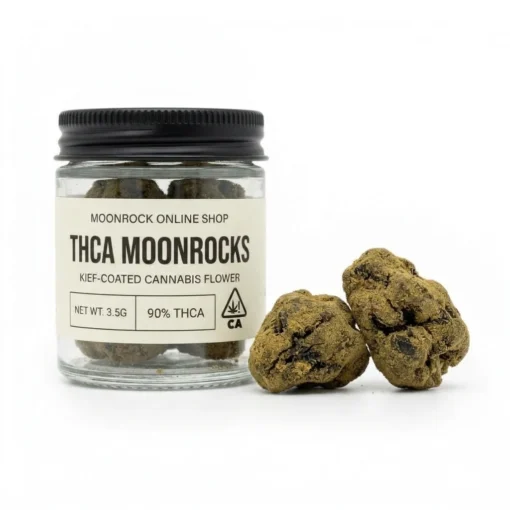
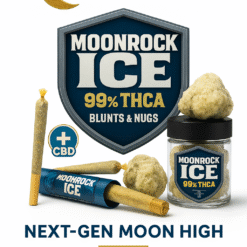
THCA Moonrocks from Moonrock Online Shop are cannabis flower pieces with a dusting of sifted kief on the outside. The kief clings to the sticky surface, giving the pieces the layered finish that identifies this style of flower. If you’re familiar with plain flower, the easiest difference to see is the fine, granular exterior around each piece.
If you’re comparing THCA Moonrocks for Sale, start with three practical details: what’s on the outside, how the package quantity is stated, and what information identifies the batch. Together, those details tell you more about a particular package than a product name or a close-up photo can on its own.
Kief-Coated THCA Flower
Kief is the name for the fine material collected by sifting trichomes from cannabis flower. Trichomes are the tiny resin-bearing structures found on the plant. In a kief-coated moonrock, that material sits on the outside of the flower piece. The result has a dusty, granular finish, with some areas looking more evenly covered than others because of the shape of the flower underneath.
This Infused THCA Flower has a sifted kief exterior. When you look closely at a moonrock, the finer grains at the surface can look different from the larger contours of the flower. Those are two parts of the same piece. A dusted ridge and a darker indentation can also look quite different under the same light, so a single shade is a poor way to identify the ingredients.
The term kief-coated describes the finish. It leaves room for a separate ingredient description for the flower and anything underneath the kief. If you compare a product that lists a named strain with one that lists a coating, you’re reading two different kinds of information. One describes the flower, while the other describes what covers its surface.
What Kief-Dusted Moon Rocks Look Like
When you compare THCA Moonrocks Online, a close-up helps you see whether the finish looks fine or coarse and how the outer layer follows the shape of the piece. A wider photo helps you see the overall shape. Both views can be useful, especially if you’re used to looking at photos of plain flower where more of the natural surface is visible. The coated exterior changes what you can see at a glance.
Lighting changes how that surface appears. Bright light makes small grains and ridges easier to see, while a shadow can make the same piece look darker. A photo can be useful for recognizing the format, but it takes an ingredient statement to identify the material beneath the exterior. A photo also gives you no direct way to establish the batch’s aroma or its cannabinoid content.
Individual pieces of flower can differ in shape. The size of a single piece is a visual detail, while the net weight describes the amount in the entire package. This distinction is useful when one picture shows a single piece and another shows a group. The close-up can look larger simply because the photographer moved closer.
THCA Moonrocks for Sale by Package Size
When reviewing a size option, use the net weight shown for that option. Net weight refers to the contents of the package. The container and lid add to the weight of the full package, so a photo of a jar or a measurement of a closed container serves a different purpose. For these moonrocks, the listed product quantity describes the coated flower pieces as sold.
If you’re comparing listings, make sure the weights are in the same unit and that you’re reading the quantity for the specific option you selected. A photo may focus on one package configuration even when a listing offers multiple sizes. Reading the selected option and package label together helps resolve a difference between how large something appears on screen and how much the package contains.
A weight is also different from a piece count. Two packages with the same net weight can contain pieces of different shapes or sizes. If the product is listed by weight, use that figure to compare quantities. Treat the number of pieces visible in a close-up as part of the photograph unless the listing specifically gives a piece count.
How to Read Batch and Lab Information
A batch identifier helps connect the package to information about the particular lot. Look for labels such as batch or lot on the package. Those entries identify a production lot, while other fields may identify a product or package option. If you have two packages of the same named product, compare the identifiers before relying on a report from either one.
When a certificate of analysis is available, compare the sample name and batch or lot identifier with the corresponding package details. The sample name helps you distinguish between a report for a finished moonrock and a report for an individual component, such as the flower or kief. Those reports describe different samples, so the distinction matters even when both mention the same cannabinoid.
Next, read the cannabinoid name, the numerical result, and the unit as a group. A column expressed as a percentage and a column expressed as milligrams per gram use different scales. Keep the test date and sample identifier with the figure if you’re taking notes for a comparison. That makes it easier to find the same entry later, particularly when a report spans several pages.
A result for sifted kief describes that kief sample. To learn what a lab measured in a finished THCA Moonrock, look for a report that identifies the finished product and matches the batch. A range quoted for similar flower or coatings cannot supply the measurement for an individual finished lot.
Our Signature Moonrocks have their own product page. The THCA Moonrocks listing describes this product’s kief exterior, while the Signature listing is the place to check details for that line. If you have both pages open, compare the feature descriptions first, then check the exact package option you’re looking at on each page.
Start with the flower and coating. A shared format can explain why two products look similar, yet the specific ingredients may differ. Next, compare the net weights using the quantities tied to the options you selected. Finally, check whether each package has a batch reference you can match to a report. Taking those steps in order makes it easier to distinguish a visual preference, a package-size decision, and a question about the actual composition.
For more context on the format and how the general category got its name, see our guide to moonrocks. The guide covers the broader topic. Use the details on the individual listing and package when you’re comparing specific products.
THCA stands for tetrahydrocannabinolic acid. A heading that includes THCA identifies the product as it appears in the shop, while a cannabinoid panel identifies what the lab measured in the sample it received. When both are available, use the name to find the item and the report to look up the measurement. The two serve different purposes even when the same term appears in both places.
You may also see terms such as flower, infused flower, and moonrocks when browsing the shop. Those terms can describe the kind of product or the way it’s presented. The ingredient description is where to look for the more specific answer. For this listing, the detail you can identify directly is the sifted kief exterior around the flower. If a different listing uses a similar category name, read its own description before assuming it has the same finish.
How to Store the Package and Keep the Label
Follow the storage and handling directions printed on the package. If the label gives a specific condition or date, use that information for the package you have. Keep the label with the product so you can still refer to the lot identifier, weight, and any package instructions after opening it. Those details can also help if you have a question about a particular lot later.
If a batch number prints on a small sticker or in a place that’s hard to read, take a clear photo while the label is intact. Include the product name and net weight in the same photo when they appear together. This is especially useful when you keep several items with similar packaging and want to match the correct label to a document later.
Frequently Asked Questions
What does kief-coated mean?
It means these THCA Moonrocks have sifted trichomes on the exterior. The fine material clings to the sticky flower surface and gives the pieces their dusted finish. If you’re looking at a close-up, the small grains at the edges are the feature to look for. The coating name describes what covers the outside of the piece.
Can I identify the base strain from a photo?
Use a strain name shown in the product information or on the relevant package label. In a coated flower product, the exterior covers some of the features you would normally see on plain flower. Color and shape also depend on the piece and the lighting. Those details can help you recognize the style of product, while the ingredient or strain statement is the place to look for a cultivar name.
What does net weight include?
Net weight measures the contents. Weighing a closed package will also include the container, lid, and any other packaging. For a side-by-side comparison, use the net weight shown for each product option. This lets you compare the amount of product even if two containers look similar from the outside or use different materials.
Which lab report covers the finished product?
Look for a report with a sample description and lot identifier that match the finished product package. Then find the line for the cannabinoid you’re checking and read its unit. A report for an ingredient can describe that ingredient in detail, while a report for the finished lot is the relevant record for the combined product.
Why do coated pieces look different in photos?
A close-up exaggerates small details, while a wider photo makes it easier to see the full outline. Lighting affects how the grains and recesses appear, and the shape of the individual piece changes how the kief catches the light. Use the images to see the type of finish and refer to the package and batch information for details a photo cannot establish.
Can I use one batch report for two packages?
Check the lot identifier on each package against the one on the report. Two packages with the same product name can come from different lots. If the numbers differ, use the report that corresponds to each package. Matching the identifiers first is a simpler way to compare the results than starting with the percentage columns and trying to work backward.
What to Check Before You Buy THCA Moonrocks Online
If you plan to Buy THCA Moonrocks Online, look for a clear description of the coating and a listed net weight for the package you select. On this product, the sifted kief gives the flower its dusted exterior. When comparing them with Signature Moonrocks or another flower product, check the net weight and ingredient details for each option. If you want to compare cannabinoid results, match the report to the lot on the package so you’re looking at the figures for that specific batch.