The Real Risks of Buying Cannabis on Social Media (2026 Buyer’s Guide)
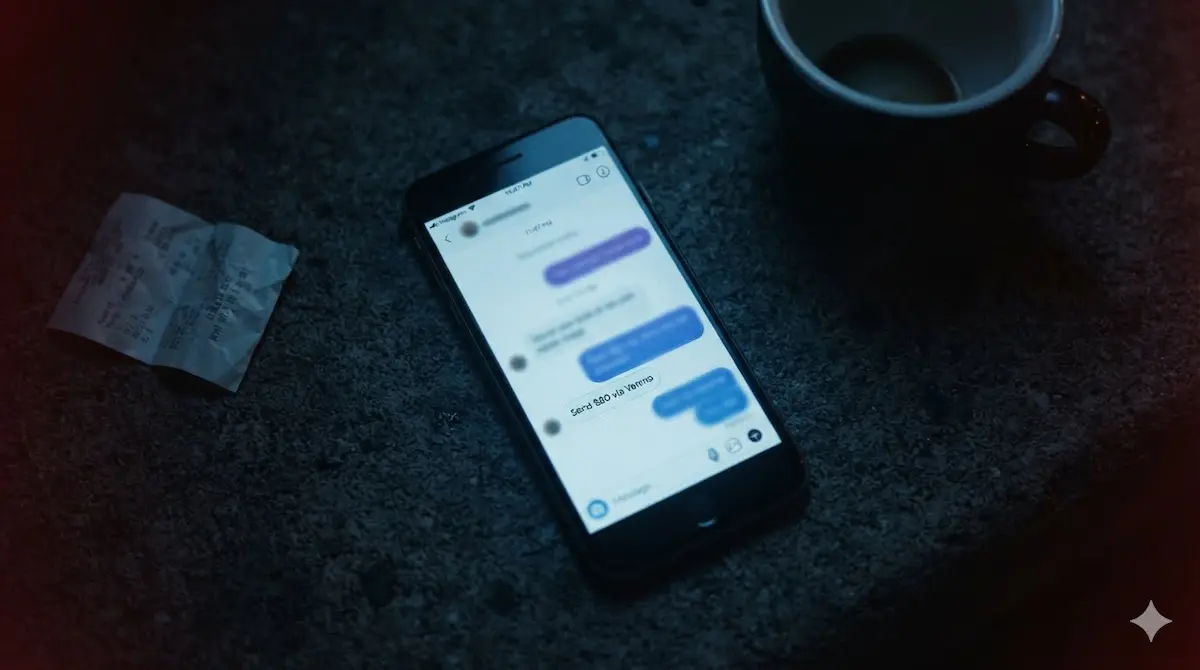
It’s 11:47 PM on a Tuesday. You DM the account. In addition, their bio says top-shelf and same-day. However, their grid is full of vacuum-sealed jars. Their pinned story shows customer reviews you can’t quite verify. Twenty minutes later, you’ve Venmoed $80 to someone whose real name you don’t know. The account is gone by morning. In this post you will understand Instagram weed dealer scams
This isn’t a rare event. Buying cannabis on social media is the largest single scam vector in the American cannabis market — bigger than fake COAs at brick-and-mortar shops, bigger than mail-order gray market, bigger than street-level bunk product. Fake cannabis sellers online now outnumber licensed operators on Instagram by a wide margin, and social media cannabis fraud accounts for a rapidly growing share of consumer complaints in every legal state. Every article about it online sounds like a middle-school health class.
This isn’t that article.
What follows is a working buyer’s guide to the seven real risks — how they happen, what they cost, and how to avoid them without pretending nobody ever buys weed online. Written from the licensed side of the industry, for readers who deserve straight answers about buying cannabis on social media.
If you’ve already been scammed, skip to the “If You’ve Already Been Scammed” section near the end. Everyone else, start here.
Why This Guide Isn’t a PSA
Almost every top-ranked article on buying cannabis on social media reads like a Nancy Reagan speech: don’t do it, terrible things will happen, drugs are bad. That framing is useless. Adults are going to make their own decisions. What they need isn’t moral guidance — it’s a map of the failure modes.
You’ll get: the seven risk categories in order of how often they actually happen, the specific scam mechanics behind each one, a platform-by-platform risk profile, a red-flag checklist you can screenshot, an honest price comparison to licensed delivery, and a recovery playbook if you’ve already been burned.
You won’t get: shame, moralizing, or the implication that avoiding social media dealers means avoiding cannabis. Licensed delivery exists in almost every legal state and it’s cheaper than the DMs claim.
The Seven Risks, Ranked by How Often They Happen
Every article about buying cannabis on social media covers one or two of these and skips the rest. Here’s the full taxonomy:
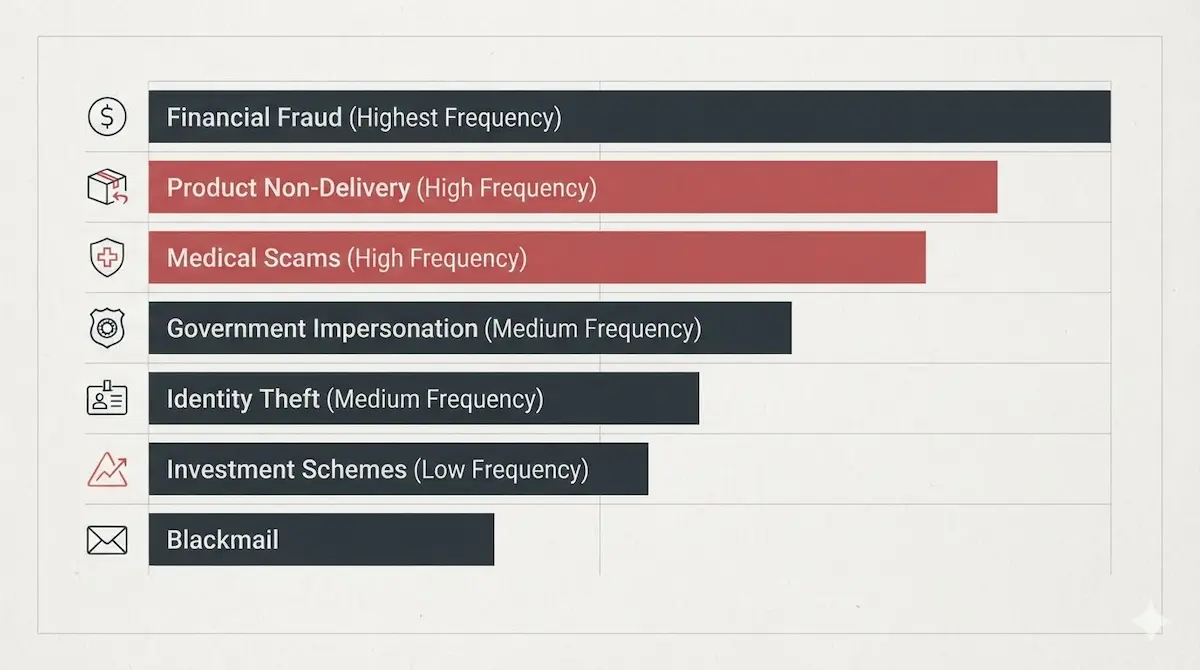
- Financial fraud — pay-and-vanish scams
- Counterfeit product — fake brands, mystery contents
- Health risk — pesticide contamination, vitamin E acetate, heavy metals
- Law enforcement exposure — stings, catfish accounts, DM subpoenas
- Identity theft — ID photos used for downstream fraud
- Physical danger — meetup robberies
- Blackmail and extortion — screenshots and ID photos weaponized
Financial fraud is by far the most common. Blackmail is the rarest but the most life-altering. Every risk on this list has happened to smart, adult, informed buyers who thought they knew better. Let’s take them one at a time.
Risk 1: The Pay-and-Vanish
Financial fraud accounts for the majority of Instagram weed dealer scams and most Snapchat-based social media cannabis fraud. The mechanics are boringly consistent: you DM the account, negotiate a price, get a Venmo or Cash App handle, send money, receive confirmation, then either the account blocks you, the account deletes, or the “shipment” never arrives.
The Five Most Common Scam Patterns
Pay-and-vanish. Direct. Simple. The seller vanishes the second the payment clears.
Half-now-half-on-delivery. They ask for half upfront to “cover shipping” or “prove you’re serious.” You send it. Then they demand the second half before delivery. You send that too. Then nothing.
The escalating fee. Money sent. Package “on the way.” Then a message: customs fee, insurance fee, “verification fee.” Each fee is smaller than the last, calibrated to keep you sending. This is the sunk-cost trap.
The referral upsell. You get “your order” — usually nothing, sometimes a tiny amount of low-quality product. Then they ask you to refer three friends to unlock a bonus. Your friends get scammed. You get nothing.
The fake tracking. They send you a “tracking number” that goes to a fake USPS or UPS page (a URL one character off from the real one). The fake tracking updates for a few days, then stalls. By the time you realize, the transaction is buried in your Venmo history.
Why Venmo, Cash App, and Zelle Won’t Save You
⚠️ Warning: PayPal, Venmo, Cash App, and Zelle all explicitly exclude illegal transactions from their fraud protection. Once you send the money for cannabis, it’s gone. No arbitration. No recovery. No chargeback.
Peer-to-peer payment apps aren’t credit cards. Their terms of service treat every transfer as a personal payment between friends, and their fraud protection specifically excludes purchases that violate the law. Buying cannabis in a state where it isn’t legal, or buying from an unlicensed seller in a state where it is, both qualify. If you paid by debit card through Cash App’s card feature, you have a slightly better shot at a chargeback — but the moment your bank sees the merchant category as an unlicensed cannabis transaction, they usually deny it too.
Risk 2: The Counterfeit Product
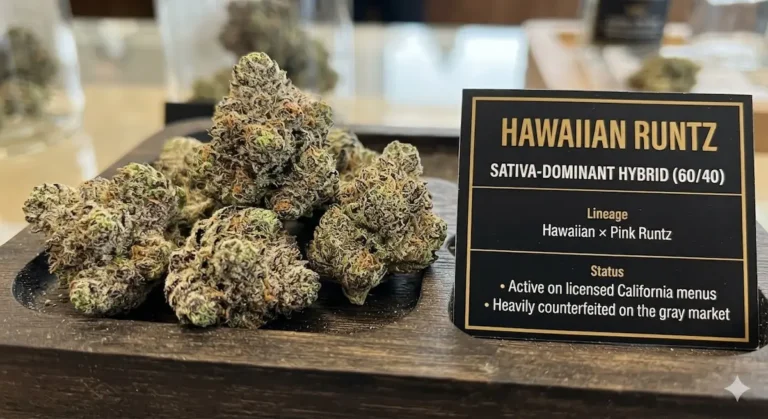
The second-most-common outcome isn’t losing your money — it’s getting something that isn’t what you paid for. Fake cannabis sellers online run a massive counterfeit ecosystem: fake Runtz jars, fake Dankwoods tubes, fake Backpack Boyz packaging, fake Stiiizy pods, fake Jeeter prerolls. The packaging is designed to look real. The contents almost never are.
What’s Actually Inside Counterfeit Cannabis
Nobody knows for sure. That’s the point. Fake cannabis sellers online rely on the fact that most buyers can’t distinguish a real jar from a copy at a glance. Regulated cannabis in California is tested for pesticides, heavy metals, microbial contamination, residual solvents, and mycotoxins by state-licensed labs before it can be sold. Counterfeit product skips every step. Independent testing on counterfeit vape cartridges pulled from fake cannabis sellers online has repeatedly found:
- Vitamin E acetate — the compound implicated in the EVALI lung-injury crisis
- Pesticides banned by California — including myclobutanil, which converts to hydrogen cyanide when burned
- Heavy metals — lead and cadmium leaching from cheap cart hardware
- Cutting agents — MCT oil, propylene glycol, unknown thinning solvents
- Under-dosed or over-dosed THC — cartridges labeled 90% THC that test at 40%; edibles labeled 10mg that test at 80mg
How to Spot a Fake COA
Social media dealers know buyers ask for lab tests now. So they send lab tests. Almost every “Certificate of Analysis” that circulates in Instagram and Telegram DMs is fake. Watch for a generic PDF with no scannable QR code, a lab name you can’t Google (real California labs are listed on the DCC site), results that look too clean (real COAs always show trace pesticides and moisture percentages), batch numbers that don’t match the packaging, and a COA that “belongs to” a different product than what’s being sold. For real lab tests, the batch number on the package should match the batch on the COA, and the COA should be verifiable at the testing lab’s site. If any of those three things fails, you’re looking at counterfeit product. (See: The Most Common Counterfeit Cannabis Products in 2026.)
Risk 3: The Health Risk Everyone Forgot About
In late 2019, hospital ERs across the U.S. started admitting young, previously healthy patients with severe lung injuries. Some died. The cause turned out to be a compound called vitamin E acetate, used as a cutting agent in bootleg THC vape cartridges sold predominantly through social media.
The CDC ultimately linked the outbreak to 68 confirmed deaths and 2,807 hospitalizations. The peak was late 2019 and early 2020. Public attention moved on. The supply chain didn’t. Bootleg carts sold on Instagram and Snapchat in 2026 still frequently test positive for vitamin E acetate, undisclosed pesticides, and heavy metals. The specific product that caused EVALI was never in the licensed market — it lived and still lives in the exact channels this article is about.
Safety note: EVALI was the single largest public-health event in cannabis history, and its cause — an unregulated cutting agent in a cart from an unlicensed seller — is still circulating. Licensed cannabis testing exists specifically to catch this.
For current CDC data on vape-related lung injuries, see the CDC EVALI outbreak page. Their formal surveillance ended in early 2020; the supply chain that caused the crisis is largely unchanged.
Beyond vape hardware, unregulated flower and edibles carry their own risk profile — pesticides at levels that would fail any California lab test, mold and yeast from unregulated cure environments, heavy metals from unregulated soil. Understanding these unlicensed cannabis delivery risks is what separates informed buyers from statistics. Licensed vape alternatives like our King Pen carts go through the testing protocols counterfeits skip entirely, and if you’re curious what regulated cultivation actually looks like, our indoor cannabis cultivation education walk-through covers the parts of the supply chain buyers rarely see.
Risk 4: The Sting
Here’s what nobody tells you about buying cannabis on social media in a legal state: legality doesn’t fully protect you. Cannabis is legal in California for adults 21+, but unlicensed cannabis transactions aren’t. Buying from an unlicensed seller on Instagram — even in Los Angeles — is a misdemeanor purchase from an illegal source. And law enforcement is watching.
What LE Actually Does
CBS reporting on Denver police documented undercover agents using Facebook, Twitter, and Instagram to entrap buyers. A national law-enforcement survey found that <cite index=”22-1″>80% of officers called social media a “valuable crime-fighting tool”</cite> and considered catfishing — building fake seller accounts to bust buyers — ethical. Federal enforcement is more aggressive. In one recent year, <cite index=”22-1”>the federal government used Instagram to arrest more than 350 drug dealers and seize $7 million</cite>. Every one of those arrests started with a buyer’s DM.
The Snapchat “Disappearing Messages” Myth
Snapchat sells itself on ephemerality. That sales pitch is misleading in the exact context that matters. <cite index=”32-1″>Unopened Snapchat “snaps” are held on servers and can be handed over based on a search warrant</cite>. Any snap that’s been screenshotted (even one the sender didn’t know was screenshotted) lives forever on someone’s device. In cases where a phone gets seized before the messages “expire,” the app’s local storage keeps them intact — a fact that has already been used to file first-degree murder charges in fentanyl-related teen deaths.
Encrypted apps like Telegram, WhatsApp, and Signal add friction, not immunity. Device seizure defeats encryption. Search warrants for cloud backups defeat encryption. Federal cases have cracked encrypted chats routinely.
What Federal Charges Look Like
Federal exposure gets serious when packages cross state lines. Buying from a “California connect” who ships to your address in Texas triggers interstate commerce statutes — the same reason the FDA and DEA took down 44 websites selling illicit THC cartridges in one enforcement action. Federal Instagram operations targeting Instagram weed dealer scams have arrested hundreds of sellers and dozens of buyers in single-year enforcement pushes. State-legal buyers who order from out-of-state fake cannabis sellers online can face federal charges even when their own state has full legalization. Not a theoretical risk. An active enforcement priority.
Risk 5: What Happens After You Send the ID Photo
Scam dealers on Instagram and Snapchat frequently ask for an ID photo before completing a transaction. The framing is always “just to prove you’re 21, we don’t keep it.” Every part of that sentence is a lie.
What Your ID Actually Gets Used For
Once you’ve sent a clear photo of your driver’s license to an unverified account, that image enters a downstream marketplace of stolen documents. Common uses include opening fake bank accounts and credit lines in your name, verifying other scam accounts on other platforms (scammers keep buying “clean” IDs to establish new dealer accounts as older ones get banned), bypassing KYC checks on cryptocurrency exchanges to launder funds, age-verification farming for other adult-industry scams, and identity theft resale on Telegram and dark-web forums, where a clean U.S. ID with matching selfie sells for $50–$300.
The “verification code” phishing follow-up is common too. A week after the scam, you may get a text that appears to be from your bank asking you to verify a login. The scammer has your ID and enough personal data from your Instagram profile to socially engineer a support call.
What a Real Licensed Shop Does
Compare that to legitimate delivery. A licensed California retailer verifies your age at checkout via an integrated age-verification service. Your ID is scanned by the driver at delivery. Neither the shop nor the driver keeps a copy of your ID image — state law actually restricts retention of ID photos beyond the verification moment. For the operator side of that process, see our breakdown of why age verification matters for online cannabis orders. (See also: How to Spot a Non-Licensed Cannabis Website.)
Risk 6: The Meetup That Isn’t
Some social media transactions involve in-person handoffs. Some of those handoffs are robberies wearing the costume of a drug deal.
The pattern is predictable enough that police departments in multiple major cities have specific training on it. You agree to a meetup spot — usually a parking lot, sometimes an apartment building lobby. You arrive with cash. The “dealer” arrives with a partner. What happens next isn’t a sale.
Public places don’t protect you. A parking lot at 10 PM has fewer witnesses than a bar. A well-lit gas station is still a robbery risk. Meeting at your own apartment building is worse — you’ve handed a stranger your home address.
Licensed delivery drivers don’t carry cash floats (payments run through digital or debit rails), work from a locked container inside a GPS-tracked vehicle, and have shop dispatch tracking their location. Robbing a licensed delivery driver is a serious felony, and the crews that run meetup scams on Snapchat know it. They target the buyer who arrived with untraceable cash, not the driver who arrived with a tracked vehicle and no cash.
Risk 7: The Blackmail Play
The rarest risk on the list is also the most life-altering. Once a scammer has your screenshots and your ID photo, extortion becomes an option.
The script is boilerplate. A month or two after the initial scam, you get a message: “Send $500 or I’ll email your employer about your drug purchases.” Sometimes the threat is to send to your parents, your spouse, or a licensing board. This hits hardest with teachers, healthcare workers, government employees, licensed professionals, and student-athletes on scholarship.
Most extortion attempts are bluffs. Some aren’t. The people who pay usually get hit again, because paying signals vulnerability. The people who don’t pay sometimes lose jobs, custody arrangements, or scholarships anyway. The right move is to preserve all evidence, block the account, report to the platform, and if the threat is credible, consult a lawyer before paying. Paying rarely helps. Never sending an ID photo to an unverified account prevents this risk entirely.
Platform-by-Platform Risk Map
Not every platform is equally dangerous. The risk profile shifts based on how each app is designed, what payment methods dominate, and how much law enforcement attention it draws.
| Platform | Primary Risk | Common Payment | Evidence Preservation | LE Interest |
|---|---|---|---|---|
| Impersonation, pay-and-vanish | Venmo, Cash App | Full DM retention, screenshot risk | High — subpoena-friendly | |
| Snapchat | Meetup scams, disappearing-message myth | Cash App, cash on delivery | Servers retain unopened snaps; seized phones preserve locals | Very high — active DEA focus |
| Telegram | Counterfeit product at scale | Bitcoin, Cash App | Encrypted but not immune to device seizure | Growing — federal cases have cracked it |
| Facebook Marketplace | Pay-and-vanish, brand impersonation | Meta Pay, Venmo | Full Meta ecosystem retention | High — Meta cooperates with LE |
| TikTok | Referral to off-platform (usually Telegram) | Varies by handoff | Full DM retention | Rising — moved into DEA focus in 2024 |
Instagram is the highest volume: most sellers, most Instagram weed dealer scams, most impersonation. Snapchat draws the highest LE interest because of the fentanyl overlap. Telegram runs the biggest counterfeit ecosystem because encrypted channels let sellers scale before takedowns. Facebook Marketplace is underrated as a risk because sellers exploit the platform’s legitimate branding to look official. TikTok is the newest — most sellers use it as a discovery layer and push buyers to DM off-platform.
The 8 Red Flags in a Scam Dealer’s DMs
If you’re going to look at unlicensed sellers online, screenshot this list. All eight of these signals are how to spot a fake weed dealer in the first 60 seconds of contact — and the single fastest way to sidestep the most common Instagram weed dealer scams and adjacent unlicensed cannabis delivery risks before you send a dollar.
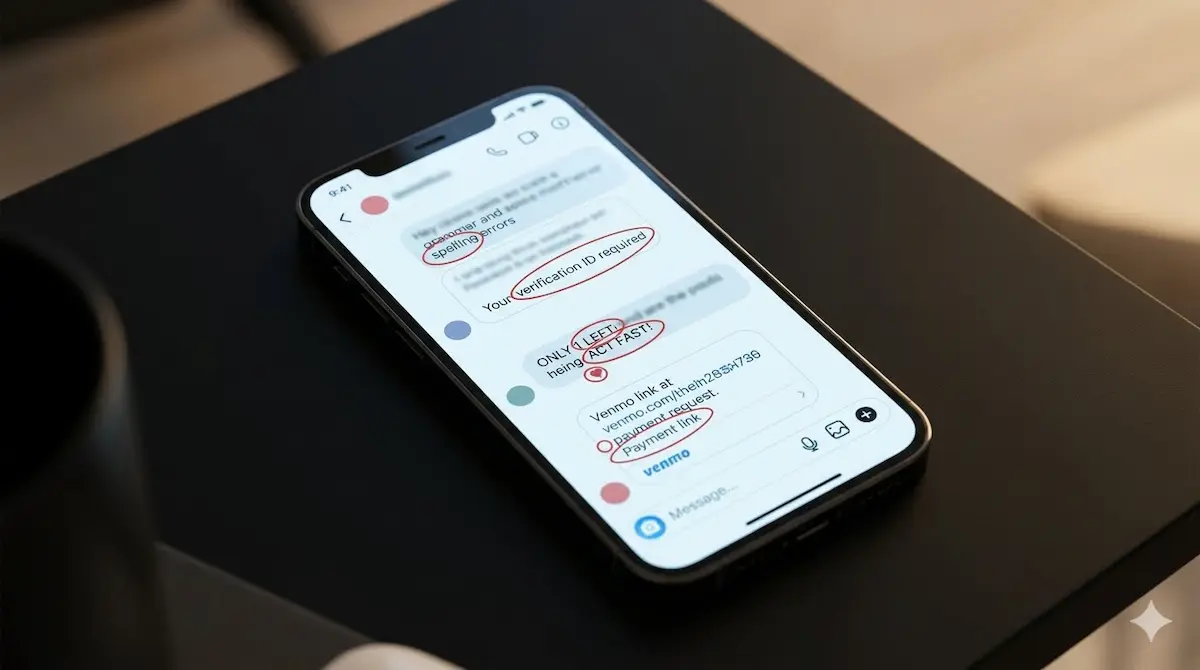
- Grammar and spelling errors in the bio or first message. Real operators, even gray-market ones, run tight copy. Scammers don’t.
- Screenshots of “past customers” as social proof. Always fake. The same screenshots often appear across dozens of unrelated accounts.
- Pressure tactics. “This price is only good for the next hour.” “One eighth left.” Real supply doesn’t need this energy.
- Payment upfront, no exceptions. No cash-on-delivery option, ever. Real dealers (licensed or not) usually offer some payment flexibility.
- “Verification” requests for ID photos before the deal is confirmed. Age verification at a real shop happens through a scanned ID at delivery, not a JPEG in a DM.
- Prices that break physics. A $60 half-ounce of “top-shelf” is not top-shelf. Neither is a $15 vape cart.
- Follower count and account age mismatch. 15,000 followers on an account created three weeks ago signals purchased engagement.
- No tagged posts, no location data, no story archive. Real shops geotag their content, tag suppliers, and build story highlights. Scam accounts are always sparse in exactly these ways.
Two or more of these signals on one account is enough to walk away. Three or more is a certainty. Knowing how to spot a fake weed dealer this fast is the single highest-leverage skill for anyone considering buying cannabis on social media.
The Real Price Gap: Licensed vs Social Media
The single most persistent myth in social media cannabis fraud is that licensed dispensaries are dramatically more expensive. They aren’t. Once you factor in real quality, testing, and the risk-adjusted cost of scams, licensed delivery in most legal states runs 15–30% more than the DM sellers claim — and often the same or less than what you actually pay after being scammed once.
| Product | Social Media Dealer | Licensed CA Delivery | Real Gap |
|---|---|---|---|
| Eighth of flower (top-shelf) | $40–$50 | $45–$65 | 15–30% |
| 1g vape cart | $25–$40 | $35–$55 | 20–40% |
| Pack of prerolls | $30–$45 | $40–$65 | 25–45% |
| Ounce of flower (mid-tier) | $180–$220 | $180–$260 | 0–20% |
At the top end of quality, the gap disappears. Licensed shops running promotions on top-shelf flower routinely price-match the gray market. Where the gap exists, you’re paying for actual lab testing (pesticides, heavy metals, microbials, potency), product liability insurance (a real recall pathway if something goes wrong), state compliance (track-and-trace, licensed sourcing, no fake COAs), and real customer service (returns, refunds, exchanges — not vanishing accounts).
Factor in unlicensed cannabis delivery risks — the scam rates that make headlines when journalists actually try to buy from social media sellers — and the licensed price is often cheaper on a risk-adjusted basis. For context on how legitimate delivery works, see our breakdowns of same-day cannabis delivery and how cannabis delivery windows work.
If You’ve Already Been Scammed
If you’re reading this after the fact, here’s the recovery playbook. Steps are ordered by what matters most.
Step 1 — Don’t message the seller again. The instinct is to demand a refund. Don’t. Every message you send signals gullibility and marks you for future targeting. Just stop.
Pro tip: Every message you send after a scam is one more data point the scammer can use — on you or on the next mark. Silence is the correct response.
<strong>Step 2 — Take a screenshot of everything, then block. Save the full DM thread, the profile page, any product photos, the payment confirmation, and any tracking links. Then block. Then move to Step 3 — don’t dwell.
Step 3 — Report to the platform. Instagram, Snapchat, Meta, TikTok, and Telegram all have “report account” flows. Report for “selling illegal goods” or “fraud.” Even if the account doesn’t get taken down, the report creates a record if the scammer targets others.
Step 4 — Secure your accounts. Change the passwords on every account linked to the email associated with your social media. Enable two-factor authentication. Freeze your credit if you sent an ID photo.
<strong>Step 5 — If you sent an ID photo, take defensive action. Place a fraud alert with the three major credit bureaus (Equifax, Experian, TransUnion). Consider a credit freeze. Monitor for bank fraud in the next 60–90 days.
Step 6 — Chargeback carefully.</strong> If you paid by debit card through Cash App, you can attempt a bank chargeback — but describe the transaction as “goods not delivered from unknown seller,” not as a cannabis purchase. Chargebacks on described-illegal transactions get denied.
Step 7 — Skip the police call, usually. In most states, the buyer of an illegal cannabis transaction has limited legal recourse and could technically be charged themselves. Exception: if you’ve been physically threatened, robbed, or extorted — in those cases, filing a police report is genuinely useful and prosecutors usually treat the underlying purchase as immaterial.
Frequently Asked Questions
Can you really buy weed on Instagram?
Yes, in the sense that accounts exist that will sell you cannabis via DM. No, in the sense that a substantial percentage of those transactions never result in real product changing hands. Buying cannabis on social media through Instagram carries the highest documented rate of Instagram weed dealer scams among major platforms.
Is buying cannabis on Snapchat legal?
Not from an unlicensed seller. Even in states with full legalization, buying cannabis from anyone without a state retail license is illegal. Snapchat’s disappearing messages don’t provide the legal protection buyers assume they do.
Can you get arrested for buying cannabis on social media?
Yes. Local and federal law enforcement actively run sting operations on Instagram and Snapchat. Federal Instagram operations have arrested hundreds of dealers and dozens of buyers in single-year enforcement pushes. Cross-state shipments trigger federal charges regardless of your state’s laws.
What happens if I get scammed buying weed online?
Financially, most losses are unrecoverable. Venmo, Cash App, and Zelle exclude illegal transactions from fraud protection. The right response: secure your accounts, screenshot evidence, report the account to the platform, move on. If an ID photo was involved, take defensive credit-protection steps.
Are Telegram cannabis dealers safer than Instagram?
They’re different, not safer. Telegram has more counterfeit product at higher volumes, less impersonation, and more law enforcement attention on the payment layer (crypto transactions). Encryption is not immunity.
Do police actually watch social media for weed buyers?
Yes. In a national survey, 80% of law enforcement officers called social media a valuable crime-fighting tool. Local catfish operations run in cities with legal cannabis, not just illegal ones. Understanding these unlicensed cannabis delivery risks is the entry point to making an informed decision.
How much cheaper is buying cannabis on social media?
ss than you think. Actual price differences between licensed delivery and unlicensed social media dealers are typically 15–30% at the product level, and functionally zero on a risk-adjusted basis once scam rates and social media cannabis fraud are factored in.
What should I do if a social media dealer has my ID photo?
Freeze your credit at Equifax, Experian, and TransUnion. Monitor your bank accounts for 90 days. Change passwords on every account tied to that email address. Don’t respond if the seller contacts you again — that’s the extortion setup starting.
How do I know if a delivery shop is actually licensed?
Every legitimate California cannabis retailer has a state license number posted on their site. Verify it in 60 seconds at the California DCC license search. If the license doesn’t exist or reads anything other than “Active,” walk away. Knowing how to spot a fake weed dealer online starts with this one 60-second check. (See: How to Verify a Cannabis Brand’s License Number.)
The Bottom Line
Licensed cannabis delivery exists in almost every state where cannabis is legal. The price gap is small. The safety gap is enormous. The legal exposure disappears entirely. Understanding how to spot a fake weed dealer, learning the real scale of social media cannabis fraud, and recognizing the unlicensed cannabis delivery risks laid out in this piece is the first step. Moving your business to a licensed shop is the second.
<h3>Lastly
We aren’t pretending nobody ever buys weed online. People do, and the ones reading this article know it. What we’re saying is that the DMs cost more than they advertise. Sometimes in dollars. Sometimes in more than that.
<p>Moonrock runs a licensed California operation with a posted license number, on-package track-and-trace tags, and delivery that arrives when we say it will. Our license is on every page of this site — verifiable in 60 seconds at the California Department of Cannabis Control. Real product, tested lab results, and delivery zones you can verify at Los Angeles vape delivery, Brooklyn weed delivery, and San Francisco delivery. If you’re new here, our guides to the best place to buy moonrocks marijuana online and moonrocks where to buy walk you through what a legit purchase looks like from start to finish.
That’s the entire pitch.
Seen a scam pattern that isn’t on this list? Send it to our support line — we’ll add the best ones to the next update.