The Most Common Counterfeit Cannabis Products in 2026
Counterfeit cannabis products 2026 buyers face are better made than ever. The fakes look real. The bags shine. The labels seem official. So this guide shows you how to tell a real product from a fake one, step by step, in plain language.
You do not need to be an expert. You just need to know where to look. By the end, you will be able to check any package in under a minute and decide if you trust it.
Let us start with the basics, then move into the details.
What Counterfeit Cannabis Products 2026 Buyers See Most Often
A counterfeit cannabis product is any item that copies a real, licensed brand without permission. The maker is not licensed. The product was not tested. The label is a copy. And the safety steps that protect you were skipped.
Counterfeit cannabis products that 2026 shoppers run into tend to fall into a few groups. Here are the most common ones.
Fake Vape Cartridges
Vape carts are the most copied item on the market. A fake cart often uses a real brand name and logo on the box. Inside, though, the oil was never tested. It may contain cutting agents, unknown additives, or pesticides.
So vape carts top the list of counterfeit cannabis products 2026 customers should check first. The hardware can look identical to the real thing, which is why the box and the seal matter more than the cart itself.
Copycat Edibles
Fake edibles copy popular candy and chocolate brands. Some even copy mainstream snack packaging, which is both illegal and dangerous, because a child could mistake them for candy.
These imitation cannabis items often skip dose testing. So one piece might contain far more THC than the label claims, or far less. Either way, you cannot trust the number on the bag.
Knockoff Flower Jars and Bags
Knockoff weed brands also copy flower packaging. They reuse a known brand’s jar shape, color, and label font. The flower inside, however, came from an untested source.
Counterfeit weed products like these are common at unlicensed pop-ups and through social media sellers. The price is often lower, which is part of the lure.
Fake Pre-Rolls and Concentrates
Copied cannabis products also include pre-rolls and concentrates. A fake pre-roll pack might carry a trusted logo while the contents are old trim or untested material. Fake concentrates may use real-looking jars with no batch data behind them.
So across every category, the pattern is the same. The outside copies a real brand. The inside skips the testing and tracking that keep you safe. To learn what a genuine label should show you, read our guide on how to read a cannabis label.
Why Counterfeit Cannabis Products 2026 Are Risky
Some people think a fake product is just a cheaper version of the real thing. That is not true. The risk is real, and it is worth understanding.
First, fake products are not lab-tested. A licensed lab screens real products for pesticides, heavy metals, mold, and solvents. A fake product skips all of that. So you have no idea what is inside.
Second, the dose is a guess. The label on a counterfeit cannabis product is a copy, not a measured fact. The real THC level could be much higher or much lower than the number printed on the bag.
Third, fake products fund an illegal supply chain. When you buy counterfeit cannabis products from 2026 sellers push, your money supports a system with no rules and no accountability.
So the safest move is simple. Buy only from a licensed source, and verify the product before you use it. The rest of this guide shows you how.
Fake Cannabis Packaging: The First Place to Look
Fake cannabis packaging is the easiest tell for most buyers. You do not need lab tools. You just need your eyes and a few minutes.
Real brands invest heavily in their packaging. Counterfeit cannabis packaging tries to copy that work, but small mistakes almost always show up. Here is what to check.
Print Quality and Color
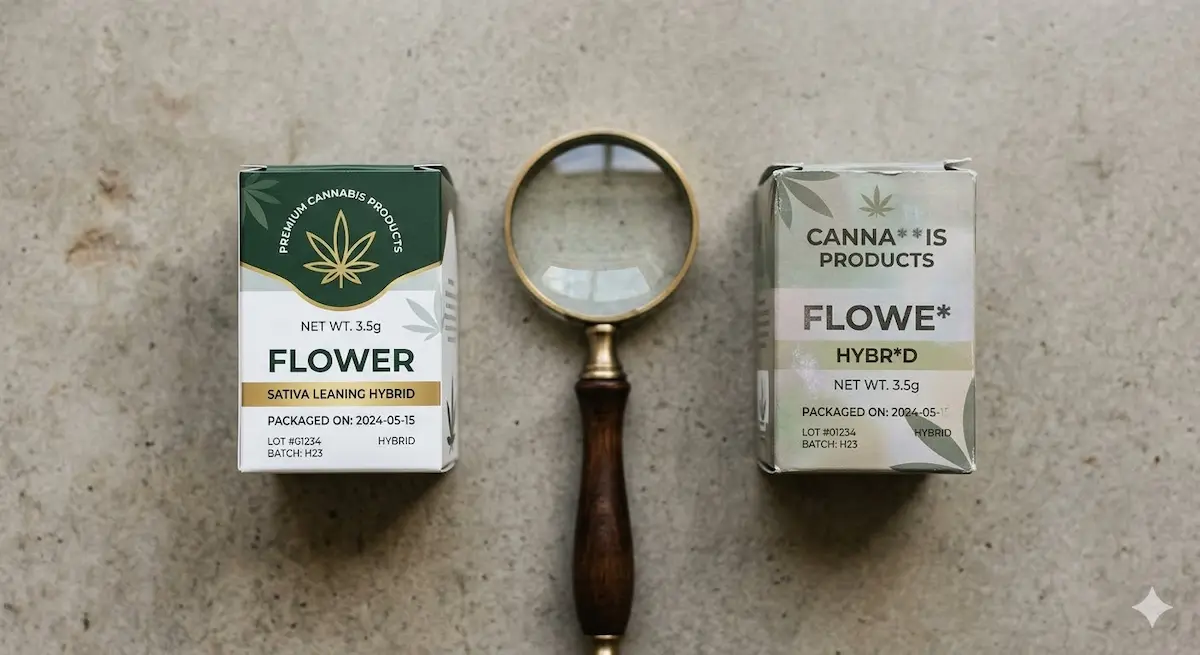
Real packaging uses sharp, clean printing. Fake weed packaging often looks slightly off. The colors may be too dark, too light, or a little blurry. Text edges may look fuzzy under good light.
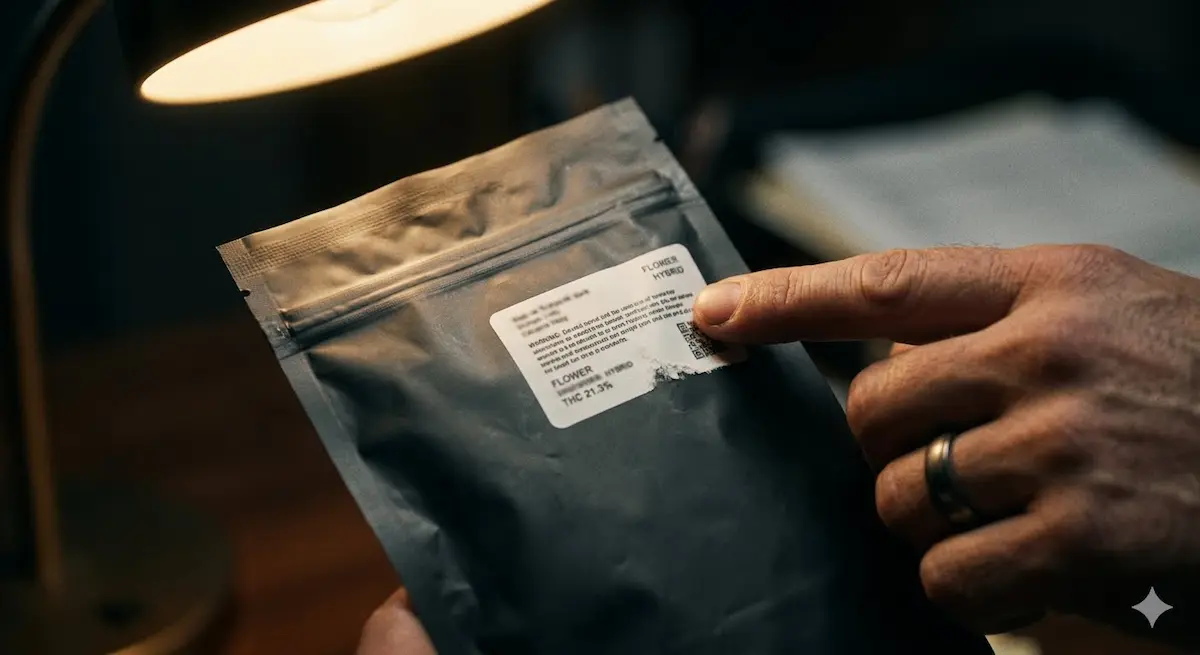
So hold the package near a lamp and look closely. Imitation cannabis labels often show tiny printing flaws that the real brand would never ship.
Spelling and Grammar
Read every word on the package. Copied brand packaging often contains spelling errors, odd spacing, or strange grammar. A real brand checks its labels many times. A counterfeit maker often does not.
So one misspelled word is a strong warning sign. Trust it.
Seals and Closures
Real products use proper child-resistant closures and clean seals. Counterfeit bag designs often use weak seals, crooked stickers, or closures that do not click shut the right way.
So test the closure. If it feels flimsy or already broken, treat the product as suspect.
Required Warnings and Symbols
In a legal market, every package must carry certain warnings and a standard cannabis symbol. Fake cannabis packaging often gets these wrong. The warning text may be missing, shrunk, or placed in the wrong spot.
So learn what a legal label should include, and check that each part is present. We cover the full list later in this guide. For a deeper walkthrough on one common fake, read our guide on how to spot fake vape carts and compare the labels.
Texture and Material
Fake cannabis packaging often feels different from the real thing. Real brands choose specific materials for their boxes, bags, and jars. Counterfeit cannabis packaging uses whatever is cheap and available. So a box that feels thin, a bag that feels slick, or a jar that feels light can all be quiet warnings.
Run your fingers over the surface. Real printing often has a slight texture you can feel, while fake weed packaging may feel flat or waxy. These small physical clues are easy to miss, yet they separate careful brands from quick copies.
Holograms and Security Marks
Some brands add holograms, color-shifting ink, or raised stamps to their packaging. Counterfeit cannabis packaging tries to copy these marks, but the copies are usually weak. A real hologram shifts cleanly as you tilt it. A fake one may look flat, smudged, or printed rather than layered.
You do not need to know how these marks are made. You only need to know that imitation cannabis labels rarely reproduce them well. So if a security mark looks off, trust your eyes and check the other clues too. Fake weed packaging rarely gets every detail right at once, which is exactly why a full check beats trusting any single feature.
How to Spot Fake Weed Brands in Six Steps
Now let us turn checking into a simple routine. Here is how to spot fake weed brands in a few quick steps. Follow them in order, and you will catch most fakes fast.
Step 1: Check the License Number
Every legal cannabis brand sells through a licensed retailer. So look for a license number on the package or the seller’s website. Then confirm it through the state. This is the single best way to identify fake cannabis brands.
If there is no license number anywhere, stop. That is a major sign of a fake weed brand.
Step 2: Read the Label Word by Word
Slow down and read the whole label. Signs of fake weed brands include missing batch numbers, missing test dates, and missing warnings. A real label tells a complete story. A fake label has gaps.
Step 3: Find the Batch Number
A batch number ties the product to its lab test. So look for it on the package. Then ask the seller to show the matching test result, often called a certificate of analysis.
No batch number or no matching test is one of the clearest signs of fake weed brands you will find.
Step 4: Scan the QR Code
Many real brands print a QR code that links to test results or a verification page. So scan it. A real code leads to a working brand page with product details. A fake code may lead nowhere or to a copied page with no real data.
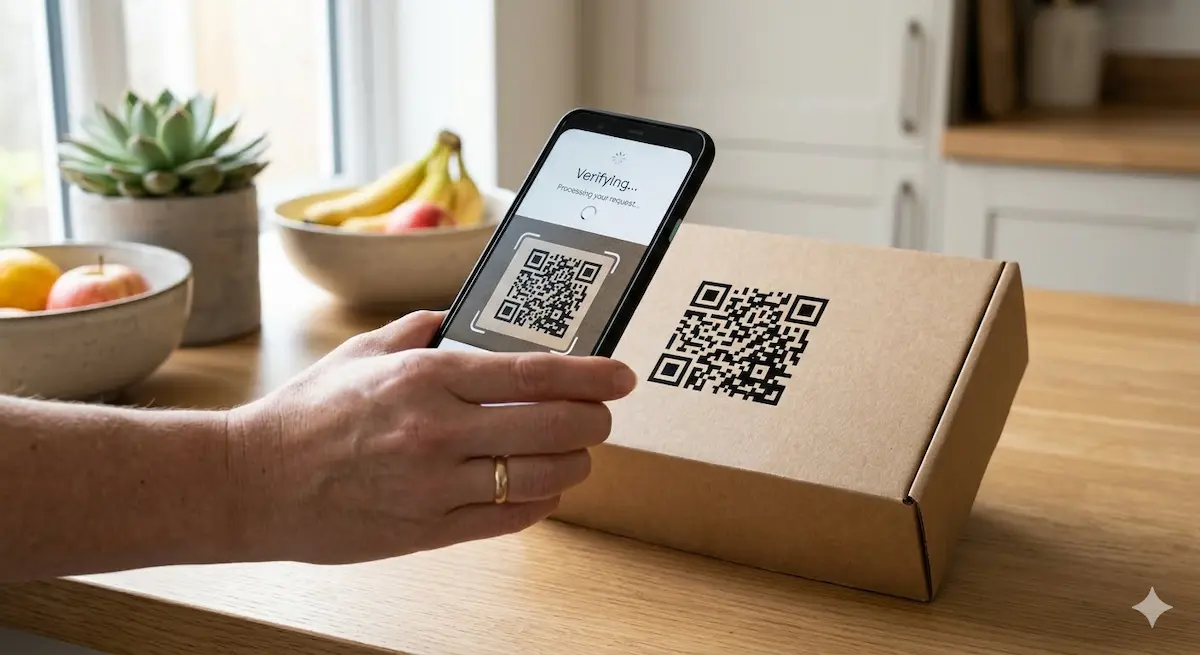
We explain QR logic in detail below because spotting counterfeit cannabis labels often comes down to where that code actually goes.
Step 5: Compare Against the Real Brand
When in doubt, visit the real brand’s official website. Compare the package in your hand to the images there. How to check if a cannabis brand is real often comes down to this side-by-side look. Fakes rarely match every detail.
Step 6: Trust the Price and the Source
A deal that seems too good is a warning. Knockoff weed brands lure buyers with low prices and easy social media sales. So if the source is not a licensed store, be extra careful. How to detect fake cannabis products starts with buying from the right place. For a real example of checking a specific brand, see our breakdown of whether Dankwoods are legit.
Why These Steps Work Together
No single step catches every fake. So the power comes from running them in order. The license check rules out unlicensed sellers. The label read finds missing details. The batch number and test confirm the product is what it claims. And the brand comparison catches clever copies that pass the earlier checks.
Learning how to spot fake weed brands is really learning to slow down. Counterfeit makers count on speed and excitement. They want you to buy before you think. So the simple act of pausing to run these checks defeats most fakes on its own.
Build the Habit
The first time you check a package, it may take a few minutes. After a few tries, it becomes second nature. Soon, you will spot the signs of fake weed brands at a glance, the same way you spot a fake bill or a phishing email.
Share what you learn, too. When you teach a friend how to identify fake cannabis brands, you protect more than yourself. You shrink the market that knockoff weed brands depend on, and you make the whole community safer.
Real vs Fake Cannabis Products: A Simple Comparison
Sometimes the fastest way to learn is a direct, side-by-side view. So here is a real vs fake cannabis products comparison you can keep in mind.
| What to Check | Real Cannabis Product | Fake Cannabis Product |
|---|---|---|
| License number | Present and verifiable | Missing or fake |
| Lab test (certificate of analysis) | Available on request | None, or copied |
| Batch number | Printed and matches the test | Missing or random |
| Print quality | Sharp and clean | Blurry or off-color |
| Spelling | Correct | Often has errors |
| Seal and closure | Strong, child-resistant | Weak or broken |
| QR code | Links to a real brand page | Dead link or copied page |
| Price | Fair market price | Often suspiciously low |
| Source | Licensed retailer | Social media or pop-up |
This authentic vs fake weed view makes the pattern clear. Real products carry proof. Fake products carry copies. So when you compare real packaging vs fake packaging, you are really comparing proof against pretending.
The difference between legit vs fake cannabis brands is not about how shiny the bag looks. It is about whether the product can prove where it came from. Real vs imitation cannabis always comes back to that single question: can it show its records?
A Real-World Example
Picture two vape boxes side by side. Both carry the same brand name and the same logo. At a glance, they look identical. This is the heart of any real vs fake cannabis products check.
Now look closer. The first box has a batch number that matches a test you can pull up online. Its QR code opens a working brand page. Its printing is sharp, and it came from a licensed store. The second box has a random number, a dead QR code, slightly blurry text, and it came from a social media seller. This authentic vs fake weed contrast tells you everything.
Do Not Rely on Looks Alone
Many buyers assume the better-looking package is the real one. That assumption fails often because counterfeit makers have gotten very good at copying art. So a real vs fake cannabis product check should never stop at appearance.
When you compare real packaging vs fake packaging, weigh the proof, not the polish. A plain package with a verifiable license and a matching lab test beats a beautiful package with no records every time. That is the core lesson of real vs imitation cannabis: proof wins.
Cannabis Brand Verification 2026: How to Confirm a Product Is Real
Verification is the final and most reliable step. Cannabis brand verification 2026 tools have improved, so you have more ways than ever to confirm a product before you use it.
Here is how cannabis brand authentication works in practice.
Use the State License Lookup
Every legal product traces back to a licensed business. So a cannabis license number check is the backbone of verification. Look up the retailer’s license through the state regulator and confirm it is active.
You can learn how the state oversees licensed sellers at the California Department of Cannabis Control, and you can review broad consumer guidance through the state’s consumer resources page.
Request the Certificate of Analysis
A certificate of analysis is the lab report for a batch. Cannabis product verification often comes down to matching the batch number on the package to the batch number on this report. A real seller can produce it. A fake seller cannot.
Check the Brand’s Official Channels
A brand legitimacy check that cannabis buyers can do at home is simple. Visit the brand’s verified website and social pages. Confirm the product you have appears there. Many brands now list their authorized retailers, which makes it much easier to verify cannabis brands.
Verify Through Your Retailer
Finally, a trusted retailer is itself a layer of verification. When you buy from a licensed store, the store has already done much of the cannabis brand verification 2026 work for you. So you can check the seller’s status before you buy — see how Moonrock weed delivery handles licensing and testing.
How Verification Has Improved
Cannabis brand verification in 2026 is easier than it was a few years ago. More brands print scannable codes. More labs post results online. And more states keep public license lookups that anyone can use. So the tools for cannabis product verification are now in almost every buyer’s pocket.
This matters because counterfeit makers have improved, too. As fakes get better, cannabis brand authentication has to keep pace. The good news is that the proof a real product carries is hard to fake all at once. A cannabis license number check, a matching lab test, and a working brand page together form a wall that most fakes cannot climb.
Make Verification a Routine
The strongest protection is habit. Run a quick brand legitimacy check cannabis buyers can do at the counter or before checkout. It takes under a minute once you know the steps.
So treat cannabis brand verification 2026 like locking your door. It is a small action you do without much thought, and it prevents a much larger problem. When verification becomes routine, fakes simply stop reaching you.
Understanding Batch Numbers and QR Codes
Two small features do most of the heavy lifting in verification. So they deserve a closer look.
What a Batch Number Tells You
A batch number is a code that identifies one specific production run. It links the product in your hand to the exact lab test for that run. So if you can match the batch number on the package to a real certificate of analysis, you have strong proof that the product is genuine.
Counterfeit cannabis packaging often prints a random number, or none at all. A random number leads nowhere when you try to match it. That gap is one of the clearest signs of a fake.
How QR Codes Should Work
A real QR code is a shortcut to proof. When you scan it, it should open a working page run by the brand or a trusted lab. That page should show product details, test results, or both.
A fake QR code behaves differently. It may not scan at all. It may open a broken link. Or it may open a page that looks real but carries no batch data, no test results, and no working contact details. So scanning the code is a fast, free way to check.
A note of fairness here: a working QR code alone does not prove a product is real, because a determined copier can link to a convincing page. That is why verification works best as a checklist. The license, the batch number, the certificate of analysis, and the QR code together build trust. Any one of them alone can be faked, but faking all of them at once is very hard.
A Closer Look at Fake Cannabis Packaging by Product Type
Different products attract different fakes. So it helps to know what fake cannabis packaging looks like across the main categories. Each one has its own tells.
Vape Cartridge Boxes
Vape boxes are the most copied packaging in the market. Fake cannabis packaging for carts often nails the front art but fails on the back. The required warnings may be missing, the batch field may be blank, and the QR code may lead nowhere. So flip every vape box over and read the back carefully.
Counterfeit cannabis packaging for carts also tends to reuse one design across many fake brands. If a box looks generic, with only the logo swapped, treat it as suspect.
Edible Pouches and Boxes
Edible packaging carries extra rules because of the risk to children. Fake weed packaging for edibles often ignores those rules. The child-resistant closure may be missing or weak, and the dose information may be vague. So edibles deserve an especially close look.
Imitation cannabis labels on edibles sometimes copy mainstream candy brands. That copying is both illegal and dangerous, so it is one of the clearest red flags you can find.
Flower Jars and Bags
Flower packaging is easier to copy because the format is simple. Counterfeit bag designs for flowers often use a known brand’s colors and font on a cheap pouch. So check the seal, the label print, and the batch number rather than trusting the look.
Across all three types, the lesson holds. Real brands invest in fake cannabis packaging defenses like security marks, clean printing, and complete labels. Copies cut those corners, and the corners they cut are exactly where you should look.
How to Identify Fake Cannabis Brands Online
Much shopping now starts online, so knowing how to identify fake cannabis brands on a screen matters as much as checking a physical bag. The clues are a little different, but the logic is the same.
Study the Website
A real brand or retailer has a complete, professional website with a visible license number, clear contact details, and real product pages. Signs of fake weed brands online include missing license numbers, stock photos only, and pages with little real detail. So read the site the way you would read a label.
Watch for Pressure and Secrecy
Knockoff weed brands online often push urgency. They offer a deal that ends soon, ask for unusual payment methods, or want to move the chat to a private app. A licensed retailer has no need for secrecy. So pressure and secrecy are strong signs of fake weed brands.
Check Reviews Across Sources
Look for reviews on more than one platform. Fake weed brands sometimes post glowing reviews on their own pages while real complaints appear elsewhere. So spotting counterfeit cannabis labels is only part of the job online; reading independent reviews is the rest.
Confirm the License Before You Pay
The final online step is the same as the in-person one. Before you pay, do a license check. How to check if a cannabis brand is real online comes down to confirming that license through the state, not trusting the website’s own claims. If you cannot confirm it, do not buy.
When you combine these online checks with the packaging checks from earlier, you cover both worlds. That is how to detect fake cannabis products, whether you shop on a screen or in person.
Where Counterfeit Cannabis Products 2026 Usually Come From
Knowing the common sources helps you avoid them. So here are the places fakes show up most.
Social Media Sellers
Many counterfeit weed products move through direct messages on social apps. The seller posts pretty photos, offers low prices, and asks for payment up front. There is no license, no store, and no way to verify anything. So treat social media sales with strong caution.
Pop-Ups and Unlicensed Events
Unlicensed pop-ups can look professional. They have tables, displays, and branded bags. Yet without a license, none of the products went through testing. So the polished look hides the same risk.
Out-of-State and Online Gray Markets
Some websites ship across state lines, which is not legal for cannabis. These gray-market sites often sell copied cannabis products with fake packaging and no real verification. So a slick website is not proof of safety.
The Safe Alternative
The safe alternative is straightforward. Buy from a licensed retailer that tests its products and can show its records. A licensed store has every reason to keep you safe, because its license depends on it. So the source you choose is your first and best defense against counterfeit cannabis products. 2026 sellers push hardest.
A Simple Forensic Packaging Checklist
Here is a short checklist you can use every time. Keep it on your phone. Run through it before you use any product.
- Is there a license number, and does it check out?
- Is there a batch number, and does it match a real test?
- Does the QR code open a working brand or lab page?
- Is the printing sharp, with correct spelling?
- Are the required warnings and symbols present?
- Is the seal strong and child-resistant?
- Does the package match the real brand’s official images?
- Did the product come from a licensed retailer?
If the answer to any of these is no, slow down and verify before you use the product. This simple routine is how to detect fake cannabis products quickly and calmly.
How Licensed Retailers Protect You
A licensed retailer is more than a store. It is a layer of protection between you and the fakes. So it helps to know what that protection looks like.
A licensed retailer buys only from licensed suppliers. Every product on its shelf came through the state tracking system. So the store can trace each item from the grower to your order.
A licensed retailer also keeps records. If you ever have a question about a product, the store can look up its batch and its test results. That is something no social media seller can offer.
Finally, a licensed retailer has skin in the game. Its license is valuable, and one bad batch can put it at risk. So the store has every reason to keep counterfeit cannabis products 2026 fakes, far away from you. You can start with a trusted source through Moonrock weed delivery and check each product’s details.
What to Do If You Bought a Fake
Mistakes happen. The packaging was convincing, the price was right, and you only spotted the problem later. So here is what to do next.
First, stop using the product. You cannot be sure what is inside, so the safe choice is to set it aside.
Second, keep the packaging. The label, the batch number, and the bag are useful if you want to report the seller or warn others.
Third, report it. You can report suspected fakes to the state regulator. Reporting helps protect other buyers and puts pressure on the sellers behind counterfeit weed products.
Fourth, switch to a licensed source. The simplest way to avoid a repeat is to buy from a store that can prove its products are real.
Common Questions About Counterfeit Cannabis Products 2026
These are the questions buyers ask most. The answers are short and clear, so you can act on them fast.
How can I tell if a cannabis product is fake?
Check the license number, the batch number, the lab test, and the QR code. A real product can prove all four. A fake product usually fails at least one. So if any check fails, treat the product as suspect.
Are fake vape cartridges dangerous?
Yes, they can be. Fake cartridges skip lab testing, so they may contain pesticides, cutting agents, or unknown additives. So buying a tested cartridge from a licensed store is the safest choice.
What does a real cannabis label include?
A real label includes the product name, the THC and CBD levels, a batch number, test dates, required warnings, the standard cannabis symbol, and the licensed source. Missing items are a warning sign.
How do I check if a cannabis brand is real?
Look up the retailer’s license, request the certificate of analysis, and compare the package to the brand’s official website. How to verify cannabis brands comes down to matching proof, not trusting looks.
Why are counterfeit products cheaper?
They skip testing, tracking, taxes, and safety steps. Those steps cost money, so cutting them lowers the price. The lower price is not a deal. It is a sign of skipped protection.
Can a fake QR code look real?
Yes. A copied page can look convincing, so a QR code alone is not proof. Use it as one part of a full checklist that includes the license and the lab test.
Putting It All Together: Real vs Fake Cannabis Products
By now, the picture is clear, so let us tie the threads together. The whole skill of telling real vs fake cannabis products rests on one idea: real products can prove themselves, and fakes cannot.
Every check in this guide is a way of asking for proof. The license check asks the seller to prove it is legal. The batch number and lab test ask the product to prove that it was tested. The QR code and brand comparison ask the package to prove it matches the real brand. So a real vs fake cannabis product decision is really a series of small proof requests.
Fakes fail these requests in different ways. Some have no license at all. Some have a license but a missing lab test. Some copy the art but botch the security marks. So no single fake fails in the same spot, which is why you run the full checklist rather than trusting one clue. Authentic vs fake weed comes down to how many of these proofs a product can show.
Why Verification Protects More Than You
Strong cannabis brand verification 2026 habits protect the whole market, not just the person doing the checking. Every time a buyer refuses an unverified product, the fakes lose a sale. Over time, that pressure pushes counterfeit sellers out and rewards the licensed brands that do things right.
So cannabis brand verification 2026 is a small act with a large effect. When you run a cannabis license number check, request a lab test, and compare real packaging vs fake packaging, you are casting a vote for a safer, more honest market. Cannabis product verification done by many buyers, again and again, is what slowly drives the fakes away.
One Minute, Every Time
The final lesson is the simplest. Real vs fake cannabis product checks take about a minute once you know them. That minute protects your health, your money, and the wider community.
So make it a habit. Check the license. Find the batch number. Scan the code. Read the label. Compare to the real brand. Buy from a verified, licensed source. Do this every time, and counterfeit cannabis products 2026 sellers will have no power over you.
Final Thoughts on Avoiding Counterfeit Cannabis Products 2026
You now know how the fakes work and how to catch them. The pattern is simple. Real products carry proof, and fake products carry copies. So your job is to look for the proof.
Check the license. Find the batch number. Scan the QR code. Read the label. Compare against the real brand. And buy from a licensed source you can verify. These steps take a minute, and they protect your health and your money.
Counterfeit cannabis products 2026 sellers count on buyers who do not check. So be the buyer who checks. When you do, the fakes lose their power, and you can shop with confidence.
Ready to buy from a source you can verify? Start with Moonrock weed delivery and confirm every product’s records before you order.
Moonrock Online Shop — Licensed California cannabis delivery serving Los Angeles. Learn how the state regulates the legal market at the Department of Cannabis Control.